Undersea cable risks are rising, what your organization should do
Ars Technica reports that Elisabeth Braw’s new book warns of growing sabotage and suspicious damage to subsea cables and pipelines. Here’s why that matters to small organizations and what to do next.
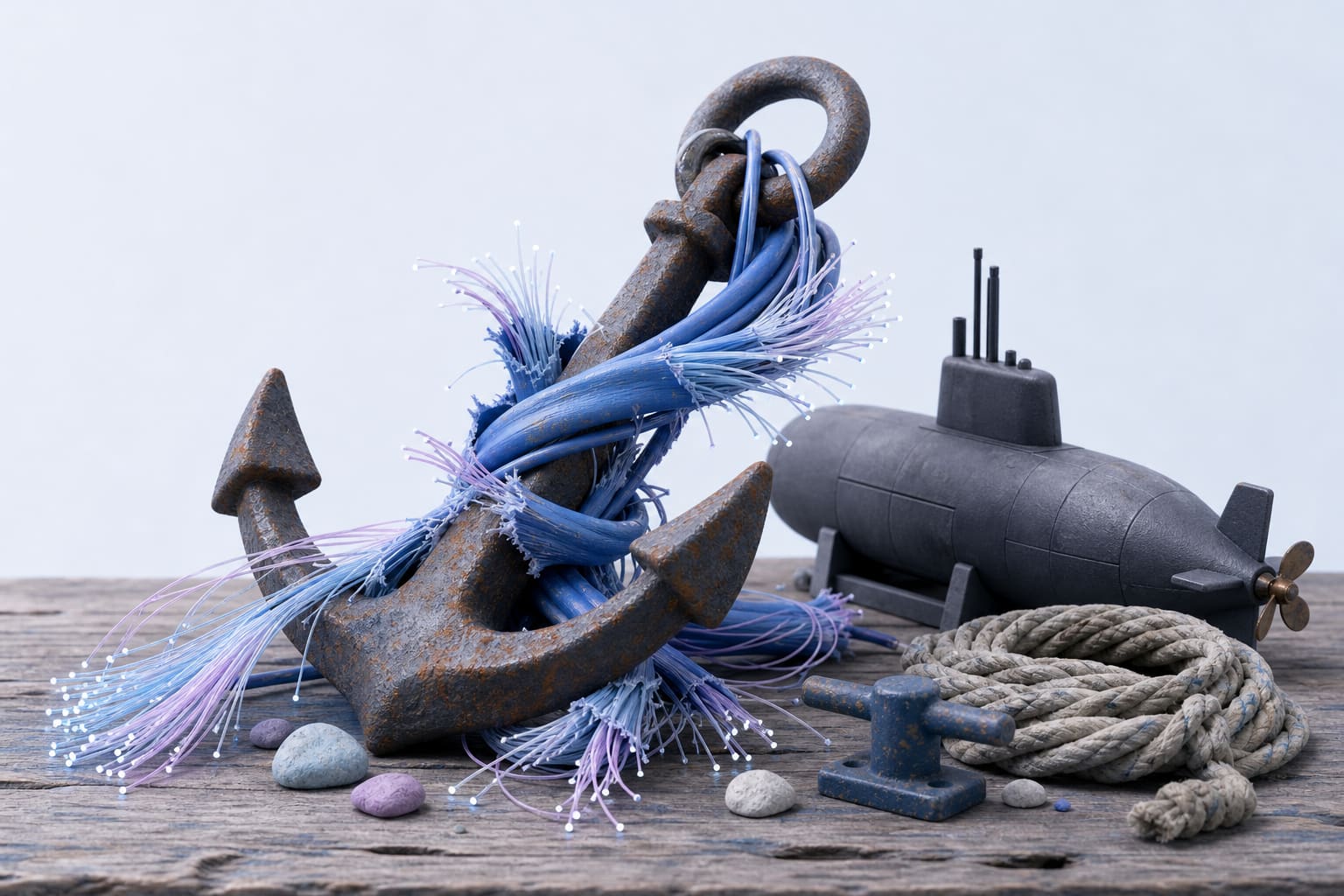
Ars Technica reports that Elisabeth Braw, in her book Undersea War, warns of rising threats to the fiber-optic cables, pipelines, and power links that lie on the ocean floor. Despite more satellite services, most global Internet traffic still moves on those subsea links, and recent incidents and military activity have increased scrutiny of cable damage and disruption.
Why undersea cable risks matter to your organization
Braw tells Ars Technica that subsea cables are critical to modern economies, and even very brief disruptions can cause large operational and financial effects in major hubs. Cables share the seabed with pipelines and submarine power lines, so damage can affect communications and energy at the same time. The article notes that most traffic still relies on these links despite the growth of satellite services, which makes subsea infrastructure a high-value target.
Recent incidents and what they show
Ars Technica summarizes a string of notable episodes that illustrate the range of causes and the rising geopolitical angle. About 60 percent of cable damage is attributed to human error in fishing and shipping, and natural hazards account for a smaller share. In total, roughly 150 to 200 cables are damaged each year and are usually repaired quickly.
The book documents several suspicious or deliberate-seeming events: a 2024 incident nicknamed the "Christmas Day massacre," when a Russian-linked oil tanker called the Eagle S dragged its anchor for about 56 miles and cut or damaged four data cables plus a submarine power cable that links the Baltic and Nordic grids. A Chinese cargo ship, Yi Peng 3, damaged two data cables in the Baltic the month before. European authorities did not prosecute that ship’s crew, while Finland has tried to prosecute three senior officers of the Eagle S.
In another case, the captain of a Chinese-owned ship named Hong Tai was convicted in Taiwan for severing a cable in February 2025 and later sentenced; Taiwan’s legislature then raised penalties to allow up to seven years in prison for intentional damage. The article also describes Iranian efforts to impose fees on cable operators in the Strait of Hormuz and a joint UK, Norway, and US operation confronting Russian submarines near Svalbard that were reportedly practicing cable-disabling techniques.
Ars Technica reports that research vessels from Russia and China have loitered near cables without properly notifying coastal states, and that merchant vessels in areas like the Baltic, off Norway, and near Taiwan have dragged anchors for long stretches in ways seafarers should avoid. For electricity links in particular, repairs can be especially costly and time-consuming.
Practical steps your team can take now
- Confirm your critical services and data paths: ask your ISP or network provider whether their routes rely on single subsea cables and what redundancy they provide.
- Review and test failover plans: include alternative Internet connections, point-to-point links, or commercial satellite service options as fallbacks.
- Update your incident response and communications plan: define who to contact, how to reach staff if primary links fail, and how to operate with reduced connectivity.
- Keep recent backups off the main route: ensure offsite backups and replication are not all tied to the same physical paths.
- Ask suppliers about recovery times and service-level agreements: include questions about how they route traffic and their procedures for long outages.
These steps are general good practice and follow from the concerns described by Braw and reported by Ars Technica; they do not require specialist changes but do benefit from confirmation with your service providers.
What to watch next
Ars Technica highlights that the international framework that once governed behavior on the seabed is under strain. The United Nations Convention on the Law of the Sea from 1982 helped set expectations, but Braw says the level of commitment among key countries is declining. Watch for legal and military developments, new prosecutions, and reported loitering or exercises by research vessels or submarines near known cable routes.
If you want help turning these risks into a practical plan for your systems, Need a web app, plugin, or integration built to last?
Sources
This post was drafted with AI from the reporting linked above and published by Jones Web Designs. For full details, read the original sources.